
Introduction
────────────────────────
Android WhatsApp backup restore not working means a backup is visible in Google Drive, but WhatsApp has already blocked recovery due to encryption conditions that no longer match the device or account state.
This is not a temporary sync delay, a network problem, or a mistake during setup.
When users see a backup listed during WhatsApp setup, they naturally assume it can be restored.
In reality, WhatsApp verifies encryption eligibility before any chat data transfer begins.
If that verification fails, the restore option may disappear, stop immediately, or never start at all.
At that point, repeating setup, reinstalling the app, or reconnecting Google Drive does not reopen the restore path.
This article explains where recovery stops in android whatsapp backup restore not working cases,
why encrypted backups block access even when a backup exists,
and where user control realistically ends once encryption prevents recovery.
────────────────────────
Step-by-Step Guide
────────────────────────
────────────────────────
Step 1: Confirm the Backup Is Encrypted
────────────────────────
Open WhatsApp and review whether end-to-end encrypted backup was enabled before the backup was created.
Encrypted backups require a specific key or password that must match the current restore environment.
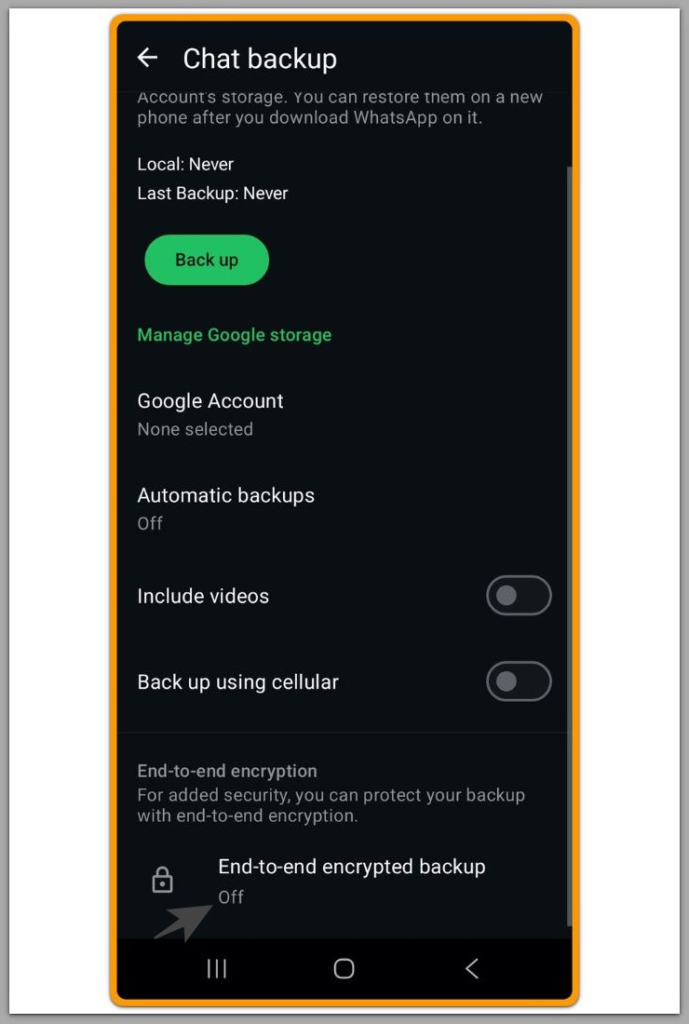
If encryption was enabled and the key is unavailable, recovery is already blocked.
This decision happens before any chat preview or restore progress appears.
At this stage, the presence of a Google Drive backup does not indicate recoverability.
It only confirms that a backup file exists, not that it can be decrypted.
────────────────────────
Step 2: Verify Account and Phone Number Consistency
────────────────────────
WhatsApp encrypted backups are tied to the exact phone number and account state used during backup creation.
Even a correct Google account cannot restore a backup if the phone number context has changed.
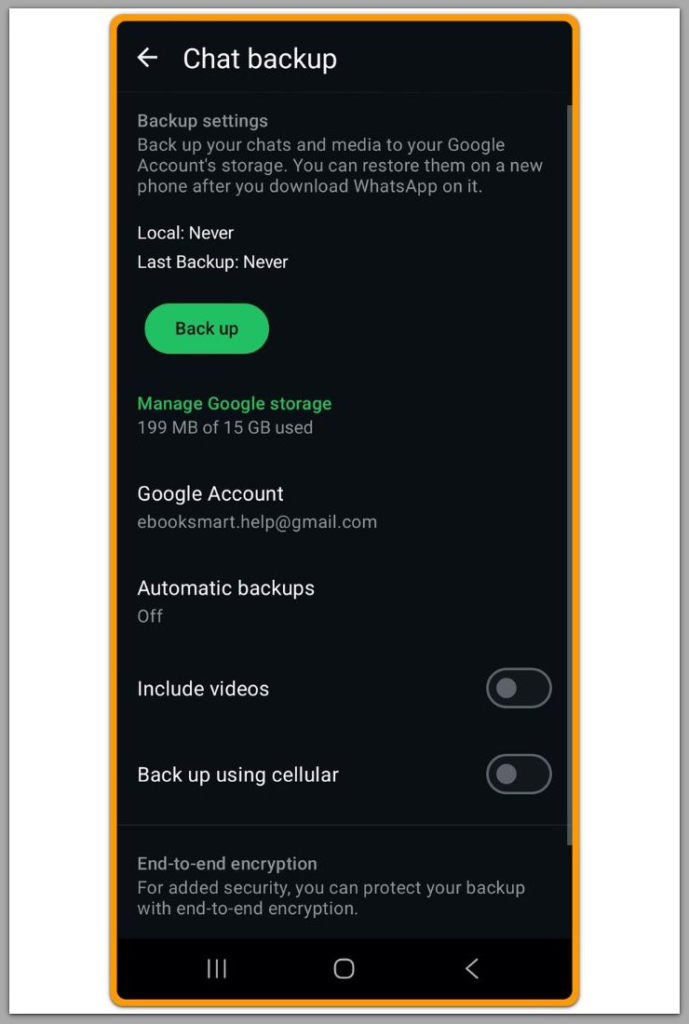
Number re-verification, SIM swaps, or account re-registration can invalidate the encryption link.
When this happens, android whatsapp backup restore not working becomes a permanent condition.
WhatsApp does not provide a user-facing warning explaining this break.
The restore process simply fails silently.
────────────────────────
Step 3: Understand Why Reinstallation Does Not Help
────────────────────────
Many users uninstall and reinstall WhatsApp expecting a clean retry.
However, encryption validation is not reset by reinstallation.
Each restore attempt reaches the same rejection point.
The app enforces the same encryption decision every time.
This is why restore behavior feels inconsistent but repeatable.
The system is not malfunctioning; it is enforcing an encryption boundary.
If the restore still fails at this stage, it is not a setup issue or a temporary error. This limitation is enforced by WhatsApp’s encryption system, and recovery is no longer possible through standard user actions.
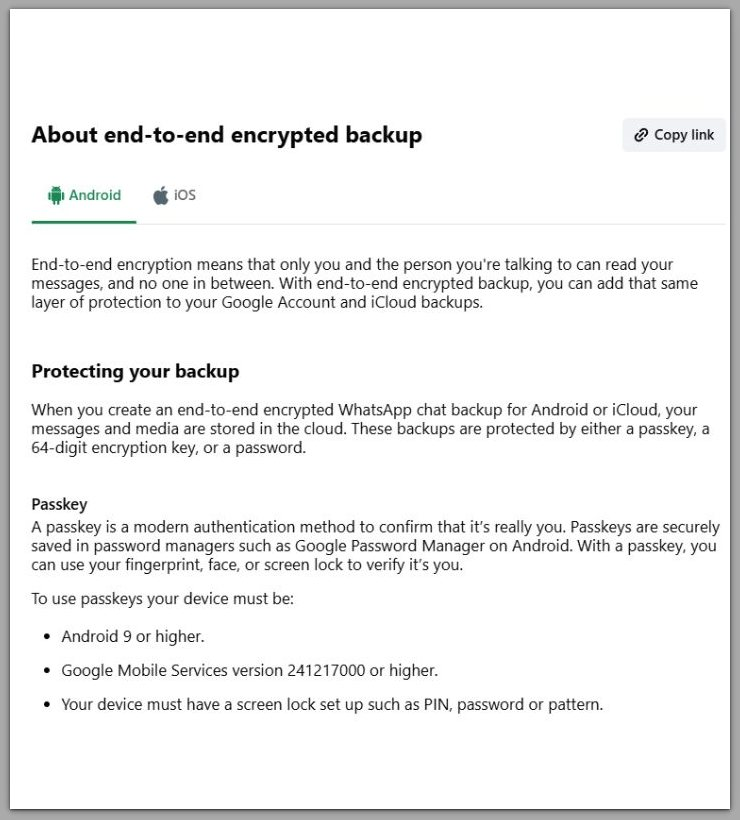
WhatsApp Help Center – Encrypted backups
────────────────────────
Troubleshooting: Android WhatsApp Backup Restore Not Working
────────────────────────
Many users continue troubleshooting because the failure does not look final.
The restore screen appears briefly, the backup is visible, and no explicit error explains the rejection.
This ambiguity leads users to assume something was missed.
In reality, android whatsapp backup restore not working occurs because the restore process already exits at the encryption validation layer.
Once this validation fails, WhatsApp does not attempt partial access or re-evaluation.
Every retry reaches the same internal checkpoint and stops before decryption can begin.
Actions like clearing cache, switching Wi-Fi networks, or changing Google accounts only affect connectivity.
They do not recreate encryption keys or rebind the backup to the current device state.
This is why troubleshooting feels active but produces no progress.
The system is not unstable; it is enforcing a completed decision.
At this stage, troubleshooting has only one remaining function.
It confirms that the failure is permanent rather than temporary.
────────────────────────
Additional Tips
────────────────────────
Encrypted backups fundamentally change recovery expectations.
They remove platform-level assistance from the restore process.
Unlike standard backups, encrypted backups do not allow inspection, repair, or reindexing.
If decryption fails, the system provides no secondary verification path.
Users often compare this behavior to cloud storage issues.
That comparison is misleading.
Google Drive stores the file, but WhatsApp controls the key.
Storage availability and recoverability operate as separate systems.
In android whatsapp backup restore not working cases, confusion comes from mixing these two roles.
The cloud holds the data, but encryption decides access.
Understanding this separation helps prevent unnecessary device resets or account changes.
Once encryption blocks access, further attempts do not increase recovery chances.
────────────────────────
Final Notes
────────────────────────
When restore fails due to encryption, the system reaches a defined endpoint.
This endpoint does not respond to user persistence.
The backup still exists, but users can no longer act on it.
That distinction is critical.
Many users interpret failure as an error to fix.
In this case, it represents a state to recognize.
Acknowledging that boundary saves time and prevents data loss through repeated reinstalls.
It also clarifies when recovery responsibility has fully shifted away from the platform.
────────────────────────
Checklist
────────────────────────
☐ Confirm encryption was enabled before the backup
☐ Verify whether the original encryption key or password exists
☐ Check phone number consistency during backup creation
☐ Identify when restore attempts repeat the same failure pattern
Once these conditions are met and restore still fails, recovery has ended by design.
────────────────────────
Extra Section 1
────────────────────────
Encrypted backups prioritize privacy over recoverability.
WhatsApp designs this trade-off intentionally.
WhatsApp does not store encryption keys, even temporarily.
This design prevents any authority from intervening after the fact.
Users often enable encryption during setup without considering long-term recovery scenarios.
The option appears as a security upgrade, not a recovery limitation.
When android whatsapp backup restore not working follows an encrypted backup,
it reflects a completed security choice rather than an app malfunction.
This design also affects long-term device changes.
When users switch phones or reset devices years later, encrypted backups do not adapt to that transition.
What once felt like a secure default quietly becomes a single point of failure.
Without the original key, time works against recovery rather than helping it.
This explains why even official support cannot bypass the block.
There is no technical mechanism to unlock the data once the key is lost.
────────────────────────
Extra Section 2
────────────────────────
From a system design perspective, WhatsApp treats encrypted backups as immutable.
They remain either fully accessible or fully locked.
The system does not provide a degraded mode where partial chats can be restored.
Decryption acts as an all-or-nothing gate.
This rigidity prevents data leakage but removes flexibility.
The restore process does not negotiate or adapt.
From the user’s perspective, this behavior often feels unnecessarily strict.
From a security model perspective, it remains consistent and deliberate.
Encryption does not allow exceptions based on intent, history, or urgency.
Once the restore gate closes, the system does not re-evaluate context or circumstances.
Recognizing this behavior changes how users interpret android whatsapp backup restore not working cases.
It is not a bug, delay, or compatibility issue.
Once encryption prevents recovery, the restore process has already concluded.
No additional setup steps exist beyond that point.